The U.S. House Investigates Tax-Exempt Foundations, pt. 1: The Cox Committee, 1952–53
On April 4, 1952, the United States House of Representatives passed a resolution enacting the Select Committee to Investigate Tax-Exempt Foundations and Comparable Organizations. The committee was tasked to probe major foundations in the United States and publish a final report determining whether those groups carried out duties patriotic to the country, or if they made subversive moves.
 |
| Chairman E. E. Cox (D–GA) |
- Brooks Hays of Arkansas
- Aime J. Forand of Rhode Island
- Donald L. O'Toole of New York
The three Republican members were B. Carroll Reece of Tennessee, Richard M. Simpson of Pennsylvania, and Angier L. Goodwin of Massachusetts. They were generally conservative Republicans, with Reece particularly being outspoken as an Old Right-aligned "reactionary." Serving as the General Counsel to the committee was Harold M. Keele.
Twelve points of focus were emphasized by the Cox Committee, as listed in the final report:
- Have foundation funds been diverted from the purposes established by the founders?
- To what extent have foundations been infiltrated by Communists and Communist sympathizers?
- Have foundation funds been channeled into the hands of subversive individuals and organizations, and, if so, to what extent?
- Have foundations supported or assisted persons, organizations, and projects which, if not subversive in the extreme sense of that word, tend to weaken or discredit the capitalistic system as it exists in the United States and to favor Marxist socialism?
- Are trustees of foundations absentee landlords who have delegated their duties and responsibilities to paid employees of the foundations?
- Do foundations tend to be controlled by interlocking directorates composed primarily of individuals residing in the North and Middle-Atlantic States?
- Through their power to grant and withhold funds have foundations tended to shift the center of gravity of colleges and other institutions to a point outside the institutions themselves?
- Have foundations favored internationalism?
- To what extent are foundations spending American money in foreign countries?
- Do foundations recognize that they are in the nature of public trusts and are therefore accountable to the public or do they clothe their activities in secrecy and resent and repulse efforts to learn about them and their activities?
- Are foundations being used as a device by which the control of great corporations are kept within the family of the foundation's founder or creator?
- To what extent are foundations being used as a device for tax avoidance and tax evasion?
All major tax-exempt foundations with assets amount to at least $10 million were mailed a questionnaire by the Cox Committee. This aspect proved to be shallow in terms of the investigation's intended scope, although its hearings uncovered substantial testimonies, including from Louis Budenz, Manning Johnson, Igor Bogolepov, and Maurice Malkin.
Carroll Reece missed much of the hearings due to family illnesses. Then Cox died on December 24, 1952 as the report was still in the drafting process, never observing the final version. Brooks Hays took over as acting chairman, as indicated in the final report. Some sources erroneously list Wayne Hays instead of Brooks Hays as the "Hays" in the Cox Committee, although the official hearings and report contradict the notion.
The final report was fifteen pages long and, in large part, declared that the investigated foundations were patriotic and not subversive. Cox only read and approved the first half of the report's earlier draft prior to its final version. Exactly until which point he was briefed of the substance is not known; pp. 1–5 in the final report only provides an overview and some vague statements about the general history of foundations. From p. 6, answers are provided, one by one, in response to the twelve questions. Virtually all the answering points provide a general exoneration of the suspicions, downplaying key evidence-based examples of subversive activities and associations as isolated or minor incidents.
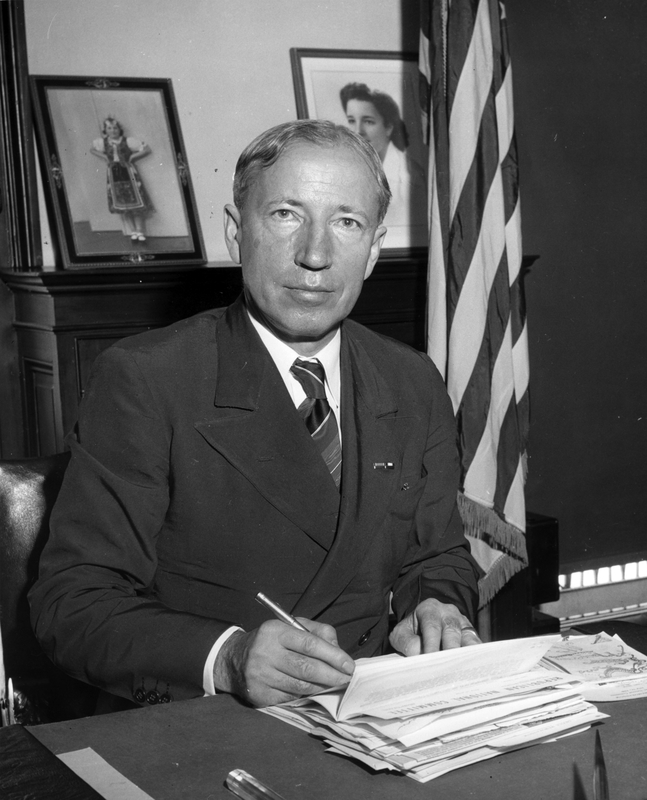 |
| B. Carroll Reece (R–TN) |
As pointed out and stressed in this report, the select committee has had in sufficient time for the magnitude of its task. Although I was unable to attend the full hearing I feel compelled to observe that, if a more comprehensive study is desired, the inquiry might be continued by the Eighty-third Congress with profit in view of the importance of the subject, the fact that tax-exempt funds in very large amounts are spent without public accountability or official supervision of any sort, and that, admittedly, considerable question able expenditures have been made.
He was not the only one dissatisfied with the investigation and report of the Cox Committee. Wright Patman, a liberal Democratic congressman from Texas, shared similar viewpoints. The point of difference between Reece and Patman was that the former emphasized subversion charges while the latter turned towards probing potential abuses of tax exemption. Ultimately, the Cox Committee's (perceived) ineffectiveness led to the continuation of congressional investigations of foundations, which I will cover in a three-part series.
For further information:
- Official hearings: http://americandeception.com/ad/wp-content/uploads/2021/05/Tax_Exempt_Foundations_Hearings-Cox_Committee-1952-818pgs-GOV.sml_.pdf
- Final report: https://coxcommitteereport.weebly.com/uploads/1/3/9/4/139443759/82_h_rept_2514.pdf
- https://fascinatingpolitics.com/2019/12/22/the-reece-committee-on-foundations-conspiratorial-nonsense-or-an-expose-of-a-threat-to-the-nation/
- https://digitalcommons.liberty.edu/cgi/viewcontent.cgi?referer=&httpsredir=1&article=1291&context=gov_fac_pubs
- https://www.nytimes.com/1952/12/11/archives/foundation-inquiry.html

Good stuff!
ReplyDeleteThank you! I'm sure fortunate to be able to access the Cox Committee final report, which is not available on Internet Archive.
Delete