Book Review: "George Frisbie Hoar and the Half-Breed Republicans" by Richard E. Welch, Jr.
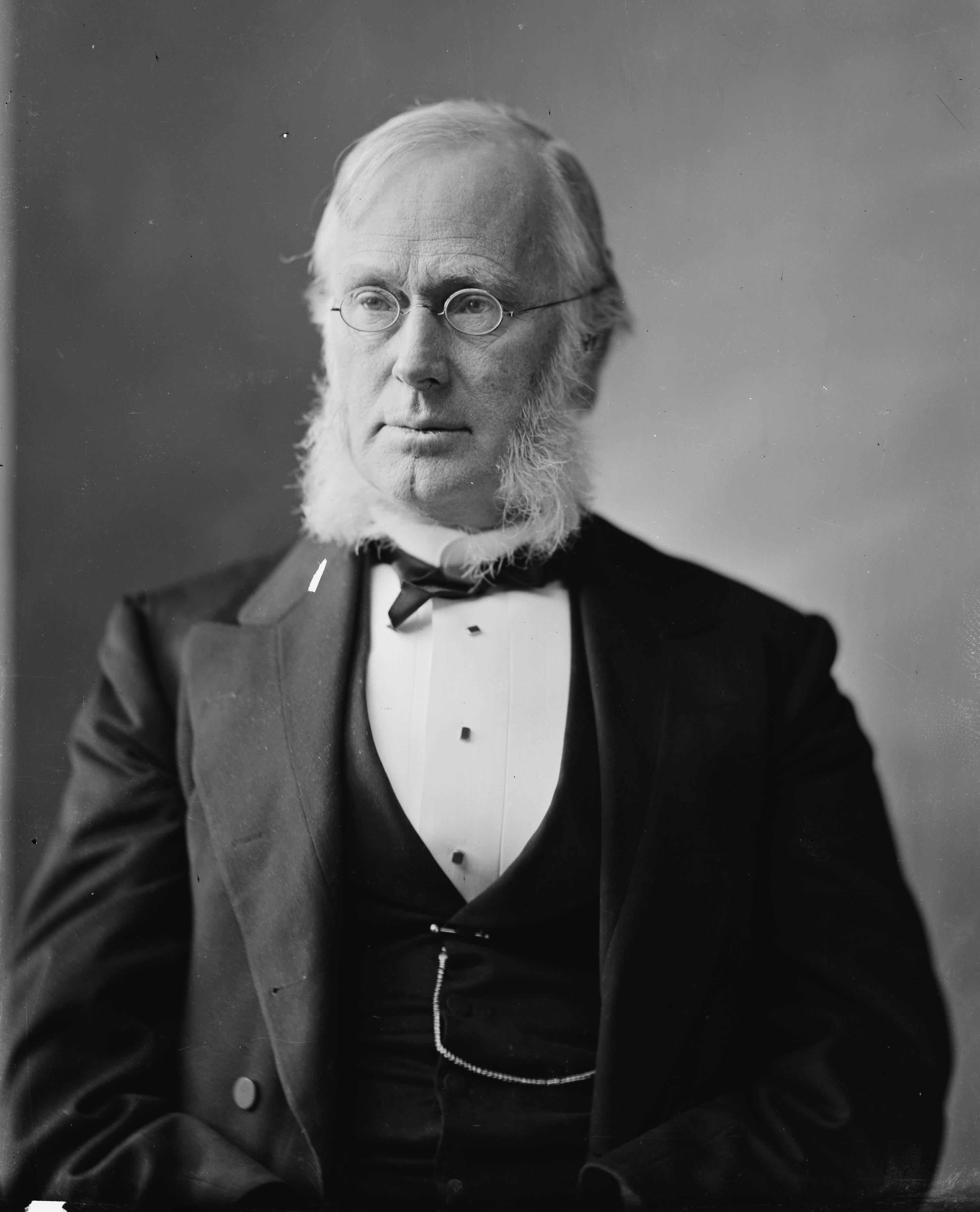
Contemporary teachings about the Stalwart vs. Half-Breed feuds of the 1870s and 1880s usually contain glaring errors as they attempt to generalize the big picture. The portrayal of the Half-Breeds during the presidency of Rutherford B. Hayes as a clique of supporters of James G. Blaine is what standard textbooks provide, though it is anything but accurate. The historical record says something different, however.
In "George Frisbie Hoar and the Half-Breed Republicans," Richard E. Welch, Jr., in part emphasizes the true characteristics of the Half-Breeds, in addition to their original comprisal among Republican Party ranks. He summarizes it well in p. 91:
By the middle of the Hayes’s administration certain politicians were already representative of the goals and prejudices of Half-Breed Republicanism. Not James G. Blaine—who at this point represented a particular wing of the Stalwarts and became a Half-Breed only with the campaign of 1880—but men like Hayes, Hoar, George Edmunds, William Wheeler, Stanley Matthews, Henry Blair, William Evarts, George McCrary, Henry Dawes, and John Sherman.
To someone who only got a simplistic impression of Republican Half-Breeds as being a band of Blaine supporters in the 1870s, perhaps this truth bomb comes as either a shock or revelation (and perhaps both). Welch corrects the historical revisionism in his explanation and elaboration of Half-Breed pursuits, which placed priorities on civil service reform, protective tariffs, and an expansive market. This book does not fully expand upon the distinction between the "Blaine Section" (or Blaine faction) and the Half-Breeds in the context of the Hayes years, unfortunately. For that, one ought to refer to this Political Science Quarterly publication by Allan Peskin available on JSTOR.
My main personal criticism would be Welch's evident favoritism and bias towards the Half-Breeds and President Hayes. In pp. 2–3, Welch portrays the Half-Breeds in a glowing style while casting the Stalwart Republicans as merely patronage-obsessed. Also, in pp. 77–79, Welch mentions the Hayes Administration's withdrawal of troops from the South and argues that:
the President was virtually forced to withdraw the troops because the Democratic House had in the previous Congress blocked appropriations for the army.
Unfortunately, Welch downplays the cynical nature of the larger picture here. He practically ignores that Moderate Republicans including Hayes and Wheeler had, already in the Republican National Convention of 1876, abandoned the party commitment to civil rights and coldly responded to Frederick Douglass that appeals to the old Southern Whig aristocracy would take priority. Welch also portrays the "New Departure" policy of Hayes almost in a nearly euphemistic manner, greater emphasizing the idealistic and optimistic beliefs of the president as earnest than focusing on the consequential results of Reconstruction's demise that brought the Southern Democrats a return to power.
The book only partially devotes its pages into examining the Half-Breeds, however. The main focus is the life of George Frisbie "Geo F." Hoar, and the stylistic theme Welch uses is excellent. Throughout the book, one truly grasps an understand of how Sen. Hoar was shaped by deep moral convictions that impacted his political viewpoints. One who reads the entirety of the book will realize the truly underrated, farsighted hero that George F. Hoar was in his time.
Now, a side note deserves mentioning regarding Hoar's approaches to the Compromise of 1877. Welch explains that Hoar, a leader among Half-Breed ranks, initially favored a conciliatory policy pursued by Hayes yet eventually believed in greater government action due to the abysmal failure of the neo-Whig fantasy in "detaching" old Southern Whigs from Southern Democrats. Due to Hoar's lifelong record against prejudice and discrimination, it's apparent that he made an earnest mistake in supporting aspects of Hayes' leniency, due to his later reversion evident in support for the Lodge Federal Elections Bill.
I thus rate the book four out of five stars. Welch's favorable bias towards the Half-Breeds and his downplaying of Hayes' abandonment of civil rights commitments are my primary criticisms, and I perceive them as partially whitewashing the devastating consequences of the events in 1876–77. Nonetheless, he perfectly delves into detail the life of George Frisbie Hoar, who rightfully and deservedly is extolled upon as a man of integrity truly ahead of his time.
For further information:

Comments
Post a Comment